

Sopa de Maní
Bolivian Peanut Soup
Charlene Amini
My mother taught me how to make Sopa de Maní, a traditional Bolivian peanut soup.
Like many Bolivian dishes, there are countless variations. Some versions include noodles, others don’t. Some add potatoes, others leave them out. You’ll find it made with chicken, beef, vegetarian, or vegan. But across every version, the maní — the peanut — always remains. It is the heart of the dish.
In 2016, research stated that peanuts originated in Bolivia. In many ways, science is simply catching up to what we already knew. This is a distinctly Bolivian dish.
For me, Sopa de Maní is comfort. It reminds me of my mother. Of the time I spent learning from her in the kitchen, and of the care she put into feeding the people she loved. I feel deeply blessed for the time I had with her, and for the recipes she passed down.
I’m sharing this Bolivian peanut soup in the hope that it brings warmth and helps others connect — whether to Bolivian roots, to family memory, or simply to the feeling of being nourished. I hope you enjoy.

Serves: 6–8

Prep Time: 30 minutes
Cook Time: 1 hour 10 minutes
Total Time: About 1 hour 40 minutes
Serving & Storage Serve hot, topped with crispy fries. This soup thickens slightly as it sits and becomes even richer in flavor. Leftovers keep well in an airtight container in the refrigerator for up to 4 days. Reheat gently on the stovetop, adding a splash of water if needed to loosen the texture. This soup is even better the next day.
Ingredients
For the Soup8 oz raw peanuts (I get mine from Santa Catalina)
4 beef short ribs (bone-in if available)
4–8 yellow potatoes, divided*
(4 for the soup and 4 for fries — or use store-bought potato stix and only 4 potatoes for the soup)
2 carrots, shredded
½ red onion, chopped
3 cloves garlic, chopped
1 celery stalk (or celeriac if you can find it — the root of celery)
A few sprigs of parsley
1 cup peas
1½ cups noodles (use what you have on hand)
Salt, to taste
Cumin, to taste
Oregano, to taste
Olive oil
For the FriesPeanut oil, for frying
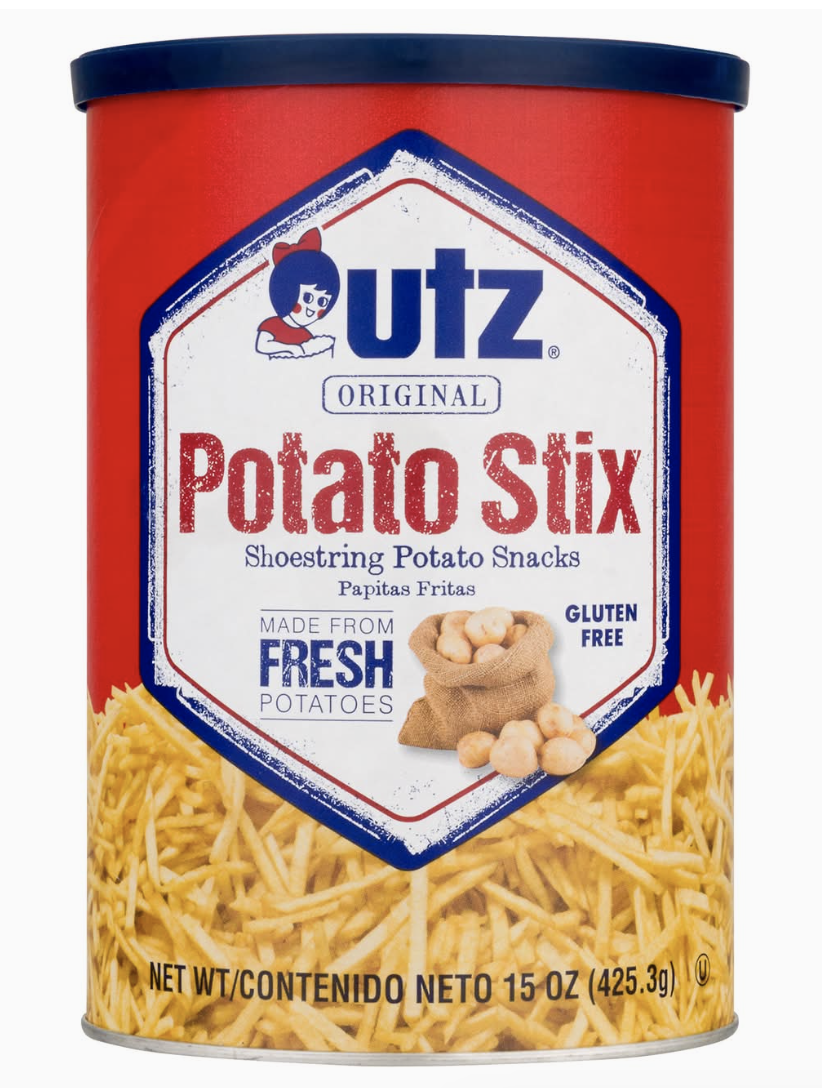
OR if you can find Potato Stix, sometimes i just put these on top:
Instructions
1. Soak the peanuts Place the raw peanuts in a bowl and cover with water. Set aside to soften while you prep the rest of the ingredients.
2. Prep the vegetables
Shred the carrots
Chop the parsley
Chop the red onion
Chop the celery
Chop the garlic
Set everything aside on a plate until ready to cook.
3. Prepare the potatoes
Cube 4 potatoes for the soup
Slice the remaining 4 potatoes for fries
Rinse well to remove excess starch. Keep submerged in water until ready to use.
4. Season and sear the meat
Season the short ribs with salt and cumin.
Heat a little olive oil in a large pot and sear the meat until browned on all sides.
Once browned, add 3 quarts of water and 1 cup of peas and the cubed potatoes. Bring to a gentle simmer.
5. Make the sofrito
In a separate pan, heat olive oil and sauté the carrots, onion, celery, garlic, and parsley.
Season with salt and cumin and cook until fragrant.
Add the sofrito to the soup pot, and salt to taste.
Let the soup boil for 30 minutes.
6. Toast the noodles
In a small pan, add the noodles and a drizzle of olive oil. Toast until golden, then set aside.
7. Fry the potatoes
Drain and pat dry the sliced potatoes.
Heat peanut oil in a pot and fry until crisp. Set aside and season with salt if desired.
8. Blend the peanuts
Drain the soaked peanuts.
Blend with ½ quart of water (2 cups) until smooth. Add another ½ quart of water (2 cups) and blend again until completely smooth.
9. Finish the soup
After the soup has simmered for 30 minutes, pour in the blended peanuts.
Add the toasted noodles and oregano. Stir well and cook for 30 more minutes.
To Serve
Ladle the soup into bowls and top generously with crispy fries or potato stix.
This is Sopa de Maní — a nourishing, deeply comforting Bolivian peanut soup, meant to be shared.
If you make this recipe, I hope it brings you comfort. Feel free to make it your own.
Made this Sopa de Maní?
Tag @americanboliviancollective so we can share your bowl and highlight how Bolivian food lives on in our community.